Taskbar Hero Pet Farming Guide: unlock, farm, and use pets without wasting runs
Pets and farming routes are easy to overthink in TBH: Task Bar Hero. The practical answer is to unlock stable farming first, then judge pets by the job they improve: clear speed, survival, drops, Trading Ship value, or long idle consistency.
Farm pets after your run is stable, not before your build works
The best pet farming route is the one your current build can clear repeatedly with low failure. Push Acts until progress slows, step back to a reliable location, then farm pets and related drops there. A pet is worth prioritizing when it improves a visible bottleneck such as clear speed, survival, useful item drops, or Trading Ship value.
- Do not judge a pet only by rarity; judge the role it improves in your current setup.
- Farm a stable area for repeatable returns before forcing a higher Act with frequent deaths.
- Check Trading Ship and market-related decisions separately from build power because prices and rules can change.
- Verify pet kill progress while the game is running; do not assume offline hours always count toward pet unlocks.
Unlock and farming route for pets
Treat pets as a mid-route optimization layer. First confirm the base loop, then move into repeatable farming where drops and idle time can be measured.
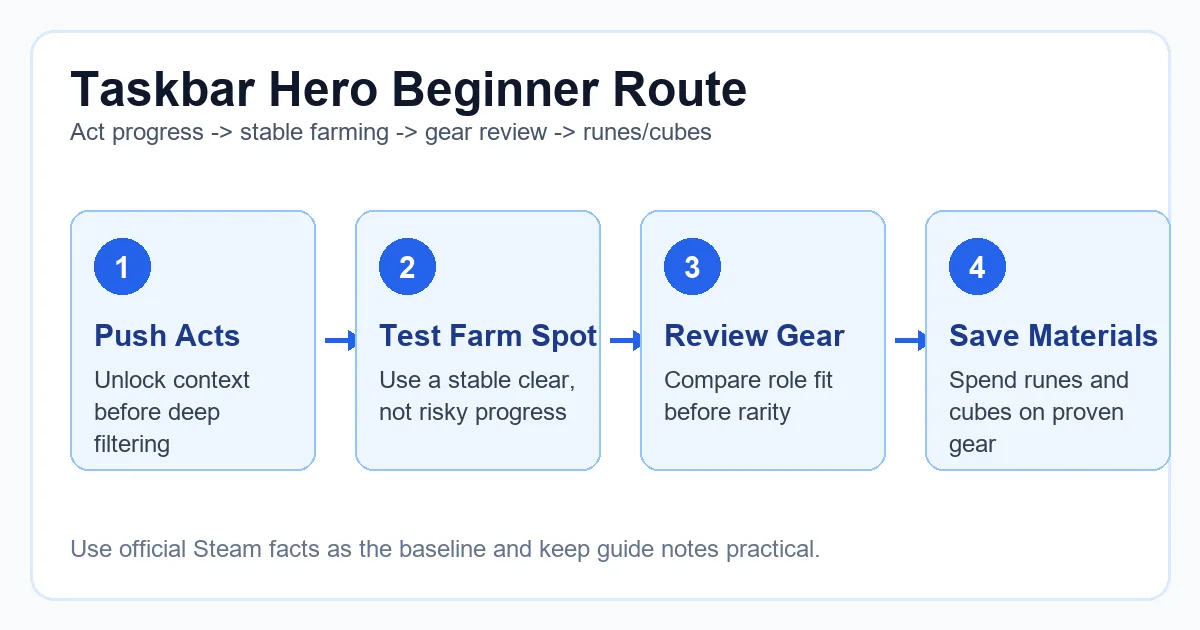
Start from the free base game and official listing
Use the Steam page to confirm the current version, supported Windows environment, DLC, and official notes before following any old pet list.
Push until the build shows a real bottleneck
If enemies survive too long, look for damage and speed help. If long idle sessions collapse, value survival and consistency more highly.
Step back to a stable farming point
The best pet farming location is often one step below your maximum push point. Stable kills usually beat a higher area with many failed runs.
Sort pet and item drops by purpose
Keep candidates that improve the build, store uncertain drops for comparison, and separate tradable or Trading Ship-relevant items before spending materials.
Retest after every important pet change
Run a short idle test after equipping or upgrading a pet. If the change does not improve clear speed, survival, or returns, delay further investment.
Which pet or drop should you farm first?
A pet farming plan should answer a player problem. The table below keeps the decision tied to the current bottleneck instead of chasing every possible drop.
| Goal | What to farm | When to stop |
|---|---|---|
| Act progress | Pets or drops that increase damage, skill output, or clear speed for the current wall | Stop when the next Act or difficulty tier becomes stable enough to test. |
| Long idle stability | Pets that support HP, defense, recovery, or consistency during unattended runs | Stop when an hour-long or work-session run produces few losses. |
| Material returns | Reliable locations with faster kills, useful drops, and manageable inventory review | Stop when returns flatten and a higher stable route becomes available. |
| Trading Ship value | Items and pet-related drops that have a clear ship, storage, or trade decision | Stop when the item should be used, stored, shipped, or checked against the live market. |
If a farm does not change the next decision, it is probably a support paragraph for an existing guide rather than a reason to keep grinding.
Evaluate pets by role, not by hype
Exact pet names and numbers can change with patches. A durable guide should teach the role check first: damage, survival, farming, or trade value.
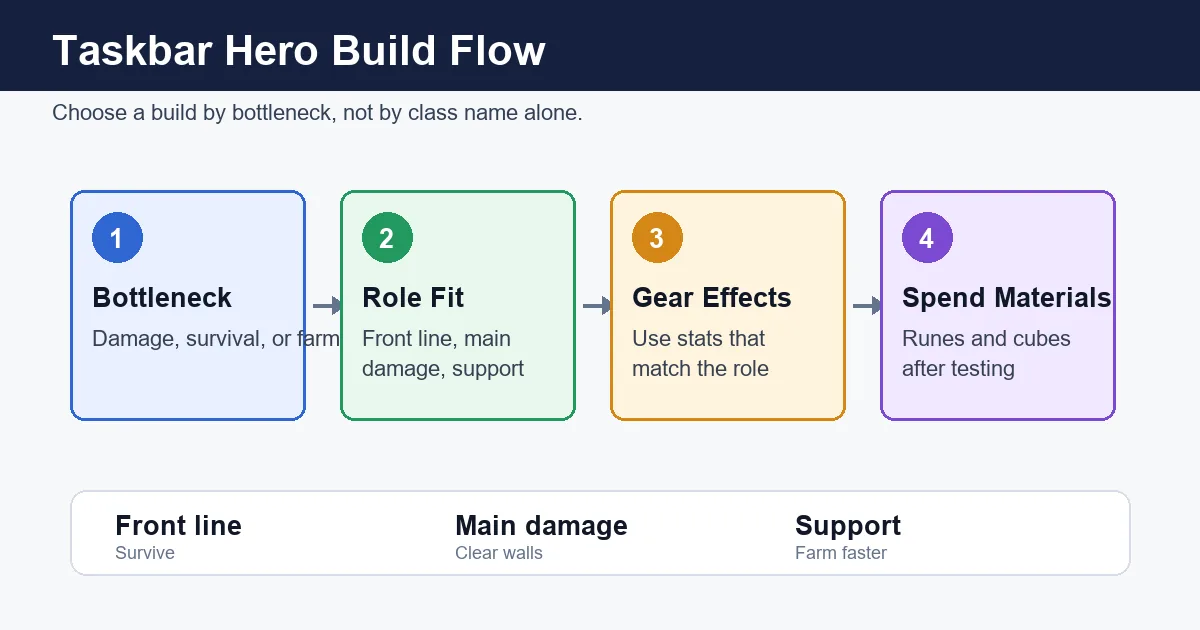
Damage pet
Useful when the build reaches enemies it cannot finish. Pair this with gear and runes that already point toward damage.
Survival pet
Useful when idle sessions fail over time. It may be better than a damage pet if deaths erase the value of faster kills.
Farming pet
Useful when you can already clear a route and want smoother material, drop, or inventory returns.
Pets players usually check first
Current community databases commonly separate five farmable base-game pets from three Supporter Pack pets. Treat the names and farm stages below as a check order, then verify the live game version before committing long idle time.
| Pet group | Typical unlock note | Why it matters |
|---|---|---|
| Bat | Defeat 5,000 Bats. Community DB examples include A1-7 City Outskirts Torment, A1-8 Cemetery Torment, and A1-7 Hell. | Early chest and EXP style value makes it a common first check. |
| Watcher / Giant Fly | Farm Giant Fly kills on a route with reliable clear speed. | Often discussed as a practical free pet because gold or farming returns help every later run. |
| Fire Spirit / Burning Skeleton | Farm the matching monster when your route is stable enough to repeat. | Boss chest or farming bonuses become more valuable once clears are consistent. |
| Blue Golem and Dark Spirit | Community discussions commonly mention Blue Golem around Act 3-6 and Dark Spirit or Ghost routes around Act 3-4 to 3-5. | Better treated as planned farms, not something to chase while your build still fails. |
| Sword, Butterfly, Dragon | Supporter Pack DLC pets, not normal free farming targets. | Evaluate DLC as a purchase decision after checking the official Steam page. |
Several community pages list 5,000 monster kills for free pet unlocks and three DLC pets from the Supporter Pack. Because patch versions differ, use this as a route-planning checklist rather than a frozen database.
Short idle test before long farming
Use a repeatable check so pet farming does not become guesswork.
- Run the selected route for 10 to 20 minutes before leaving it idle for hours.
- Verify pet kill progress while the game is running; do not assume offline hours always count toward pet unlocks.
- Record whether the run failed, slowed down, overflowed inventory, or produced useful drops.
- Compare one pet change at a time so you can tell which effect actually helped.
- Move back one route if losses are frequent, even when the higher route looks more exciting.
- Review tradable or ship-relevant items before upgrading, selling, or consuming them.
Trading Ship and market-aware decisions
The Trading Ship and Steam Market angle can make a drop look valuable for reasons that have nothing to do with battle power. Keep those decisions separate.
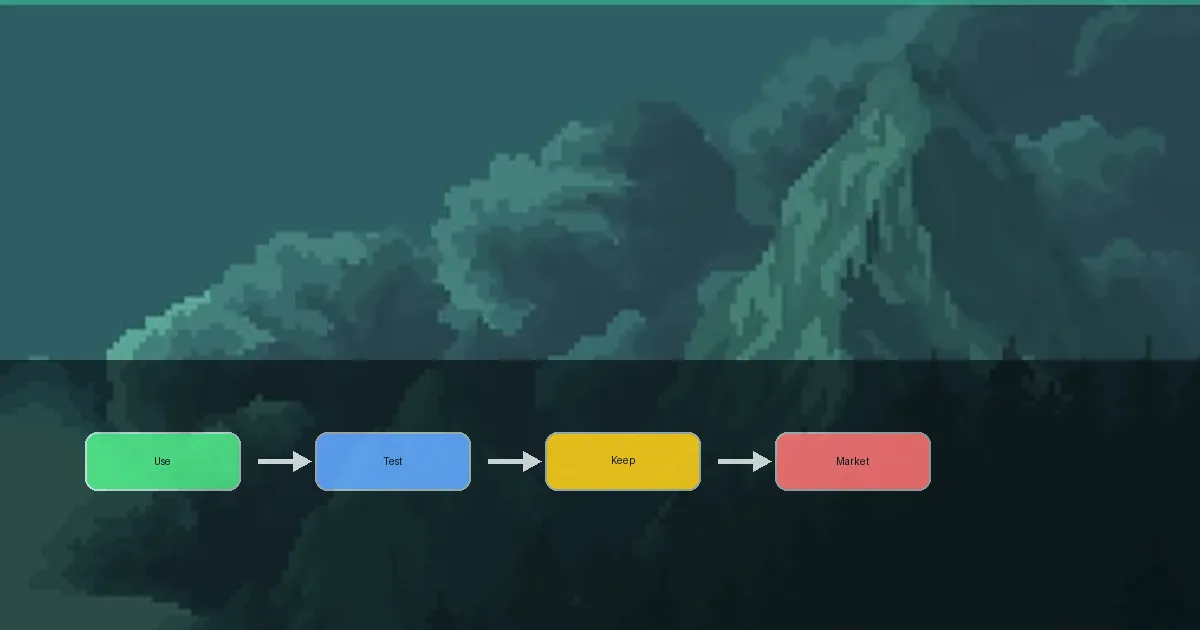
Use value
Does the pet or item improve the build right now? If yes, test it before treating it only as trade material.
Storage value
Some uncertain drops are worth keeping until you know the next build direction or unlock need.
Ship or market value
Check current in-game and Steam information before sending, selling, or buying. Guide pages cannot replace live market data.
Video context for pet farming
A short gameplay or guide video can help show the pace of farming, drop review, and idle checks. Use it as visual context, not as a replacement for current patch notes.
Embedded YouTube search is used only for topical visual context because official pet-specific media is limited and patch details may change.
Pet farming mistakes to avoid
Farming at the highest unlocked point
If losses are frequent, a lower stable route usually produces better pet and item decisions.
Spending materials before testing
A pet that looks strong can still fail to solve the current bottleneck. Test first, upgrade second.
Mixing trade value with build value
A tradable item is not automatically your best equipped item. Check role fit and live value separately.
Taskbar Hero pet farming FAQ
When should I start farming pets in Taskbar Hero?
Start after the basic build can clear a route reliably. If the run is unstable, fix class, gear, or upgrade priorities first.
What is the best pet to farm first?
The best first pet is the one that solves your current bottleneck: damage for walls, survival for long idle losses, or farming support for stable repeat routes.
Should I farm the highest Act possible?
Not always. A lower route with consistent clears can produce better practical returns than a higher route with frequent failures.
How do pets relate to Trading Ship decisions?
Some drops may have use, storage, ship, or market value. Separate those decisions and check current in-game or Steam information before spending or selling.
Do Taskbar Hero pets require 5,000 kills to unlock?
Community references commonly list 5,000 kills of the matching monster for the five farmable base-game pets. Treat that number as a planning target, but verify the live requirement and the correct route after patches before committing a long idle session.