Taskbar Hero Crafting Guide: Materials, Hero-dric Cube, and Gear Decisions
Taskbar Hero crafting is less about memorizing one recipe and more about turning drops and materials into a build that solves a current problem. This guide connects stable farming, Hero-dric Cube spending, gear tests, and market checks.
The safest Taskbar Hero crafting rule: test first, spend later
The best early crafting decision is usually not the most expensive one. Farm in a zone your team can clear consistently, inspect the role and effects of each useful drop, then test the item before committing rare materials or Hero-dric Cube resources. A piece that fixes a real damage, survival, or farming bottleneck is a better candidate than a higher-rarity item with no place in your build.
- Treat crafting as a loop of collecting, filtering, testing, and investing rather than a button you press on every drop.
- Keep a small reserve of materials so the next meaningful upgrade is still possible after a bad roll or gear replacement.
- Check build value and possible Steam Market value before modifying an item that could remain useful or tradable.
What this Taskbar Hero crafting guide covers
Crafting searches can mean recipes, material farming, Cube upgrades, or gear selection. This page covers the practical decision loop and links deeper rune, item, and build topics to dedicated guides.
| Search idea | Fit here | Best action |
|---|---|---|
| Taskbar Hero crafting | High. The page explains the full drop-to-upgrade loop. | Use this guide as the starting point. |
| Hero-dric Cube | High. Cube timing and stop rules are central. | Test gear before investing deeply. |
| Crafting materials | High. Stable farming and reserve rules are included. | Farm for a goal instead of farming everything. |
| Taskbar Hero recipes | Limited. Fixed recipes can change or be misunderstood. | Verify current in-game details before spending. |
The official Steam page and community guides describe the Cube System and build-crafting direction. Exact balance, costs, and item behavior can change, so the game display remains the final check.
The Taskbar Hero crafting loop in four stages
A reliable crafting routine reduces waste because every stage answers a different question. Do not skip directly from a fresh drop to a large Cube investment just because the item has a bright rarity color.
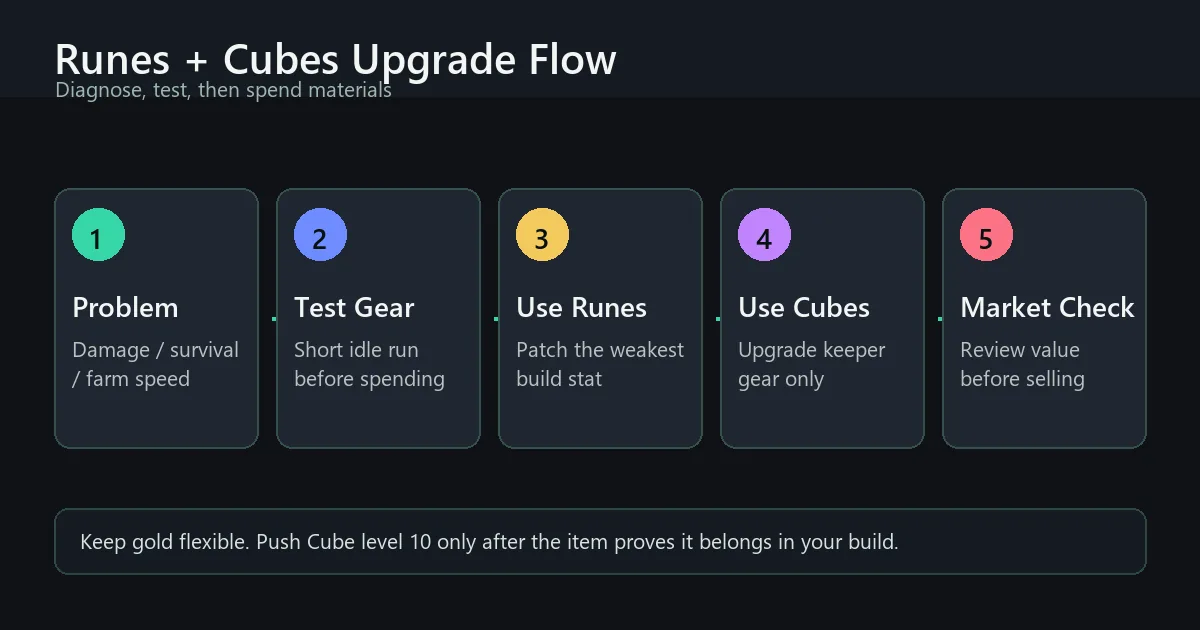
| Stage | What to do | Stop rule |
|---|---|---|
| Collect | Run a stable area and gather drops, gold, and materials while your team can clear without frequent failures. | Do not push a harder area only for a small chance at a drop. |
| Inspect | Check the item role, useful effects, rarity, and whether it supports your current class or farming plan. | A rare item with the wrong role is not automatically a craft candidate. |
| Test | Use a short idle or progression test and compare clear speed, survival, and consistency with the old item. | If the result is unclear, save materials and test again later. |
| Invest | Use the Cube or other upgrade resource only after the item has proved that it belongs in the build. | Stop when the next cost is larger than the visible improvement. All values can change. |
How to collect and spend crafting materials
Materials are easiest to waste when farming has no target. Before a long idle session, name the item or build problem you are trying to solve. That simple decision tells you which area to farm, how much reserve to keep, and when to stop.
- Start with a route your current team clears reliably. A slightly easier area with steady returns is often better than a risky zone that interrupts the run.
- Separate materials for progression gear from materials for experiments. Do not let a temporary test consume the reserve for your next important upgrade.
- Use the item and rune guides to identify the stat problem before you farm. Crafting materials cannot fix a build that has not been diagnosed.
- Keep one or two realistic candidates rather than trying to perfect every slot at once. A narrow candidate list makes Cube spending easier to compare.
- Recheck the game UI after patches. Names, costs, drop rules, and available effects are live-game details, not permanent promises.
If you are unsure what to farm, prioritize the material that removes the current progression wall. A broad stockpile without a goal often creates inventory pressure instead of power.
Choose gear to keep before you craft it
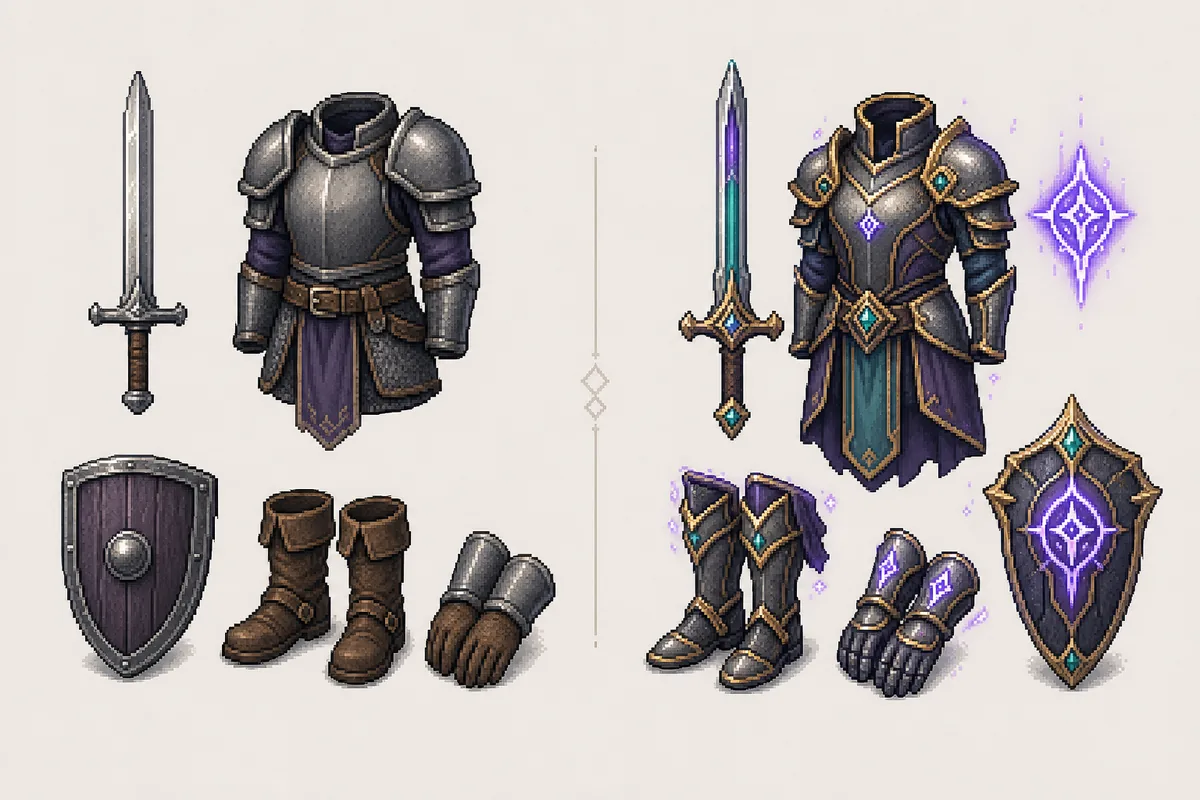
The strongest crafting habit is a clear keep filter. Compare a new item with the job it must perform, the time it can remain useful, and the cost of replacing it. Rarity matters, but it should not overrule role, effects, and test results.
Role fit
Decide whether the item is for Act progression, frontline survival, idle stability, or material farming. If you cannot name its job, keep it in a temporary test group instead of crafting it.
Useful effect
Look for an effect that solves the current bottleneck. A modest bonus that changes a failed run into a stable run can be more useful than a flashy number that does not change results.
Useful lifespan
Ask whether the item can stay equipped for several upgrades or Acts. Short-lived gear is a poor target for deep Cube spending unless it fixes an urgent wall.
Inventory and market value
Before modifying a high-rarity or potentially tradable piece, check the item guide and current game display. Build value and market value are separate decisions.
Crafting priorities by goal
There is no universal best craft. The right choice depends on what you want the next session to accomplish.
| Goal | Crafting focus | When to stop |
|---|---|---|
| Act progression | Favor damage, clear speed, and the item that helps finish the next wall. | Stop when the team clears the target consistently. |
| Stable idle | Favor survival, recovery, and effects that reduce long-run failures. | Stop when the route survives the planned idle window. |
| Material farming | Favor speed and efficiency on gear used in an area you already clear. | Stop when returns improve without making runs unstable. |
| Market candidate | Inspect tradability and market value before changing the item. | Stop and verify current rules if the modification could change its value. |
A six-question checklist before using the Cube
Run through these questions whenever an item looks exciting. The checklist is deliberately slower than clicking immediately, because the expensive mistake is usually choosing the wrong item.
- What exact problem does this item solve: damage, survival, idle stability, farming speed, or inventory pressure?
- Has the item passed a short test against the current item, or am I reacting only to rarity and appearance?
- Will this item remain useful after the next Act, class change, or build adjustment?
- Do I have enough materials left for the next known upgrade if this roll is disappointing?
- Could the item be sold, replaced, or checked on the Steam Market before I modify it?
- What is my stop point if the next Cube cost produces no visible improvement?
Check market and gear value before major crafting
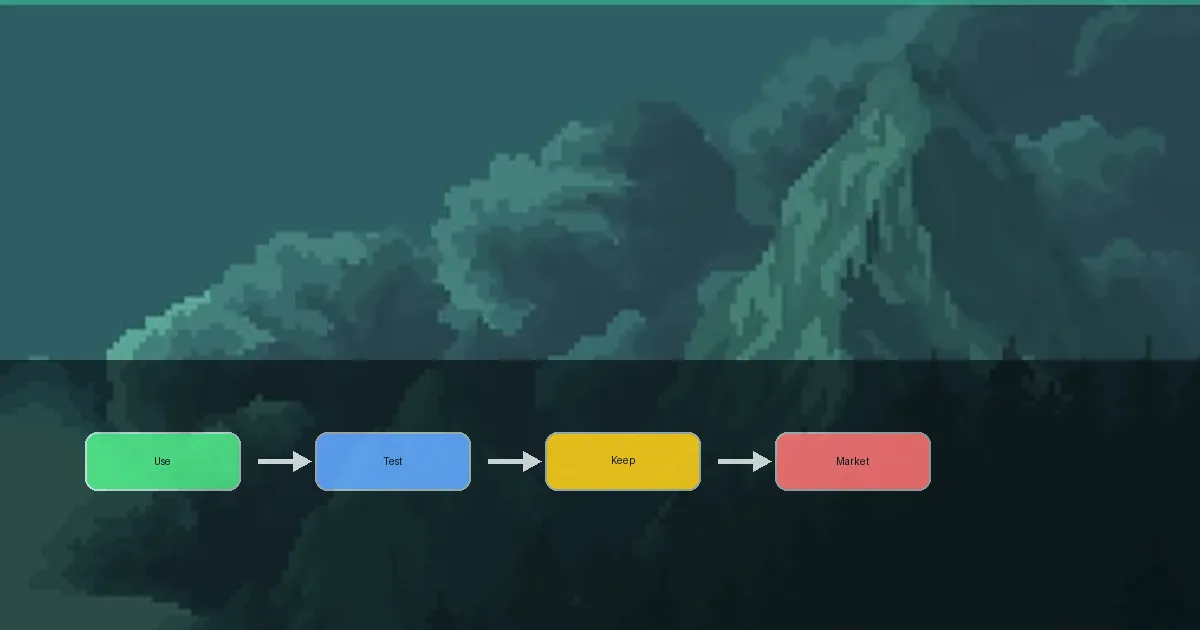
Taskbar Hero has a Steam Market angle for some items, but eligibility and prices are live details. A valuable item can still be best for your build, while a strong build item may be worth more to you than its sale price. Separate the decisions before crafting.
Check the live item display
Confirm the current item state, effects, and any trade-related notice inside the game before relying on an older guide or screenshot.
Compare use value and sale value
An item that fixes your current bottleneck may be worth keeping even when a market listing looks attractive. Make the build decision first.
Use the official source for changing rules
When a patch changes costs, effects, or market behavior, verify the official Steam information and the live game before making a large investment.
Common Taskbar Hero crafting mistakes
- Spending rare materials on a fresh drop before testing whether it improves the build.
- Treating every high-rarity item as a keeper even when its role does not match the team.
- Farming the hardest available zone while the run is unstable and losing more time than the extra drops are worth.
- Using all materials at once and leaving no reserve for the next progression wall.
- Changing a potentially tradable item before checking its current value and in-game behavior.
- Assuming a community recipe, cost, or effect is permanent after a balance update.
Taskbar Hero crafting FAQ
What does crafting mean in Taskbar Hero?
Here, crafting means collecting materials and drops, selecting useful gear, testing it, and investing through systems such as the Hero-dric Cube. Confirm exact costs and effects in the current game.
Should I use the Hero-dric Cube on my first good item?
Usually, test it first. If the item clearly fixes your current bottleneck and is likely to stay useful, it becomes a stronger Cube candidate. Do not spend heavily just because the item has high rarity.
How should I farm crafting materials?
Choose the most stable area that gives a useful return for your goal. A reliable route is often better than a harder route that fails or needs constant attention.
Are there fixed Taskbar Hero crafting recipes?
Recipe names, costs, and system behavior can change. This page focuses on the decision loop rather than claiming a permanent recipe table. Check the live game and official updates before using a large amount of materials.
Should I craft gear for damage or survival first?
Follow the reason the run fails. Use damage and speed when enemies live too long; use health, defense, or recovery when the run collapses. Stable farming gear is a separate goal.
Should I check the Steam Market before crafting?
Yes when the item may be tradable or valuable. Confirm its current in-game state and market information first, then compare sale value with the value it provides to your build.